
Begin With the Resident’s Rhythm
A visit may go more smoothly when it works with a person’s established routine. Before arriving, family members can ask the community team whether there is a time of day when the resident is often more comfortable, or whether a meal, activity, or rest period should be considered. The goal is not to schedule every moment perfectly. It is to avoid placing pressure on a loved one when the day is already full or tiring.
On arrival, taking a moment to notice the resident’s mood can help guide the visit. Some days may invite a longer conversation. On others, sitting nearby, sharing a smile, or offering a familiar activity may be enough. A flexible approach respects the person’s experience rather than measuring the visit by how much is said.
Keep Conversation Simple and Present
Cognitive changes can make it harder to follow fast questions or recall details on demand. Gentle conversation often works best when it is unhurried and focused on one idea at a time. A family member might introduce themselves warmly, make a simple observation about the day, or talk about something the resident can see, hear, or hold in the moment.
If a loved one shares a memory differently than expected, there is rarely a need to correct every detail. Listening for the feeling behind the words can be more helpful than trying to restore a precise timeline. Patience, reassurance, and time to respond may make the interaction feel less like a test and more like a conversation.
Let a Familiar Activity Carry the Visit
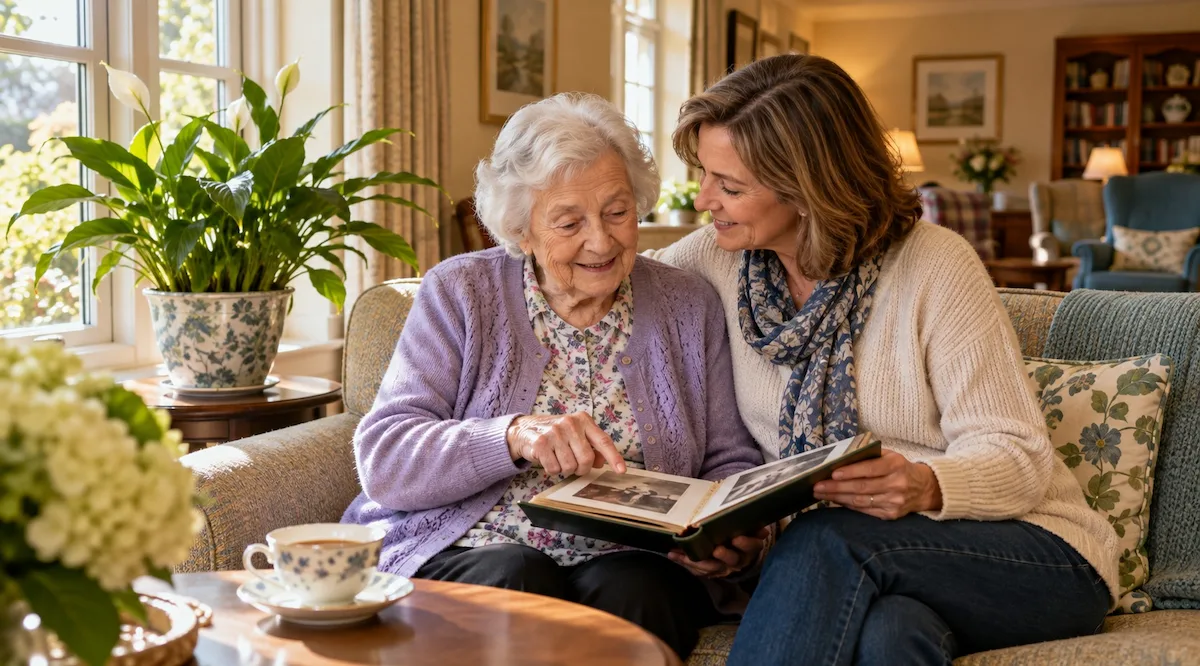
A shared activity can ease the pressure to keep a conversation going. Looking through a small photo album, listening to familiar music, folding towels together, watering a plant, sharing a snack when appropriate, or taking a short walk in an available space can create a simple focus. The right activity depends on the person, their interests, and the community’s guidance for that day.
Families do not need to arrive with an elaborate plan. One familiar song, a few photographs, or a quiet moment by a window may be meaningful. Bringing an activity that the person enjoyed earlier in life can sometimes open a path to connection, but it is always appropriate to set it aside if it does not feel welcome.
Make the Setting Easier to Navigate
A calmer setting can make communication easier for many people living with dementia. When possible, choose a quiet place to visit. Speak clearly and give your loved one plenty of time to respond without rushing them. Keeping the group small may also help a resident stay connected to the people present. If children or several relatives are visiting, preparing everyone in advance for a slower pace can make the time more comfortable for all.
It can be helpful to follow the community’s direction about where to visit and what activities fit the resident’s needs. The team may know which spaces are most comfortable or which familiar routines should be protected. That partnership gives family members useful context while keeping the resident’s dignity at the center.
Leave Room for Mixed Feelings
Families may leave a visit feeling grateful, sad, relieved, or unsure. Those reactions do not mean the visit lacked value. A relationship can remain present through touch, music, humor, shared attention, and the simple act of showing up. Over time, family members often learn which approaches feel most natural for their loved one and which expectations are best released.
When questions arise, bringing them to the Memory Care team can help families prepare for future visits. The conversation can include preferred times, meaningful topics, comforting objects, and ways to respond when a loved one seems tired or unsettled. This is a shared effort, not a performance that families have to manage alone.
- Ask about a time and setting that may feel comfortable for the resident
- Start with a warm introduction and one simple idea at a time
- Bring a familiar photo, song, or low-pressure activity
- Follow the resident’s cues and allow pauses
- Share observations and questions with the Memory Care team
Meaningful visits are built from attention, patience, and respect for the person living with dementia. Communities managed by Senior Housing Managers are dedicated to enhancing the lives of those we serve by supporting each resident’s individuality and the family relationships that remain important.
Families can learn more about person-centered Memory Care through Pacific Living Centers at https://pacificlivingcenters.com/ and New Friends of Coos Bay at https://www.newfriendsofcoosbay.com/.
By Senior Housing Managers