
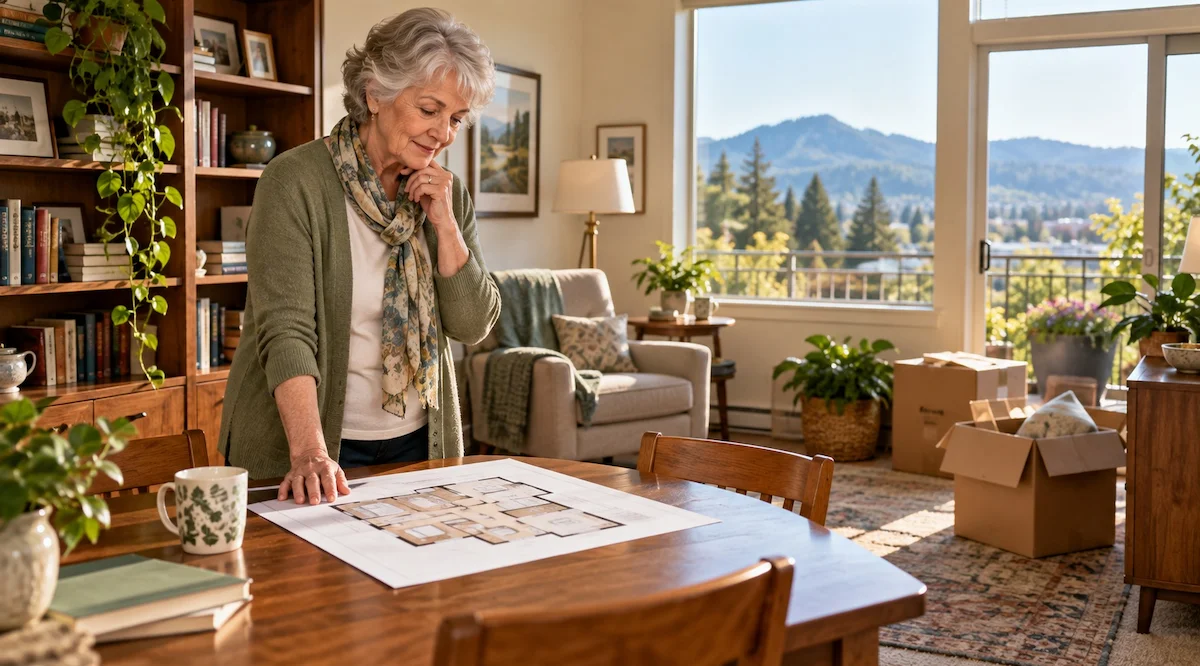
Start With the Shape of an Ordinary Day
Before comparing square footage, it helps to picture the routines that matter most. Where would morning coffee happen? Is there a favorite chair for reading, a table for a puzzle, or space to welcome a friend for a visit? A floor plan is more useful when it reflects how a potential resident actually spends time rather than how a room appears when it is empty.
Some people value a defined dining area because shared meals at home remain important. Others prefer an open living space that can serve several purposes throughout the day. Neither choice is automatically better. The useful question is whether the arrangement supports the person’s preferred rhythm, from a calm morning to an evening phone call with family.
Measure the Furnishings That Matter Most
A move does not require bringing every piece of furniture, but it can be reassuring to identify a few items that make a new apartment feel recognizably personal. A well-loved recliner, small dining table, bookcase, desk, or chest of drawers may shape the decision more than a general furniture list. Measuring those pieces before a tour makes it easier to ask practical questions about where they might fit.
Families can help by making a simple list together, while leaving the potential resident at the center of the choices. Photos, a favorite quilt, art, and treasured books can matter as much as larger furniture. Planning around those items encourages a move that feels like creating a new home, not simply reducing possessions.
Notice Storage and Everyday Transitions
Closets, cabinets, and entry space often deserve the same attention as the living room. A person may want room for seasonal clothing, hobby materials, luggage, or supplies used regularly. During a tour, asking where coats, linens, cleaning items, and other everyday belongings would go can reveal whether a layout will feel orderly without becoming crowded.
It is also worth noticing how a person moves from room to room. Door placement, the path between the bedroom and bathroom, and the route from the entry to the main living area can influence how easy the apartment feels to live in. A tour is an opportunity to pause in those spaces rather than only looking from the doorway.
Look Beyond the Apartment Door
An Independent Living apartment is part of a larger daily environment. The distance to dining, gathering areas, outdoor spaces, parking, or a preferred activity can affect how the community fits a person’s routines. A potential resident may want to consider whether the location feels connected to the places they expect to use most often while still offering a comfortable sense of privacy at home.
Natural light and the view from a window can also shape how a space feels. These details are personal, so they are best explored in person. Asking to see more than one layout, when possible, may help a person compare the feeling of each option rather than deciding from a diagram alone.
Bring Questions to the Tour
A short list can keep a floor-plan conversation grounded. Potential residents and families may ask which furnishings fit comfortably, what storage is included, whether a specific layout is available, and how the apartment connects to the community’s shared spaces. It can also help to bring measurements, a few photos of important furnishings, and a note of any routine that the new home should support.
- Which rooms would be used most often, and does their placement feel natural?
- Which personal furnishings would help this apartment feel like home?
- Is there enough storage for the belongings used from week to week?
- What would the walk from the apartment to preferred shared spaces feel like?
- What details should be confirmed before finalizing a move plan?
The right layout is not defined by size alone. It is the one that gives a person room for familiar comforts, chosen routines, and the kind of retirement they want to enjoy. Communities managed by Senior Housing Managers are dedicated to enhancing the lives of those we serve by respecting the everyday choices that help a residence feel like home.
For a closer look at apartment options and daily life, schedule a tour at Solvang Retirement: https://solvangretirementliving.com/.
By Senior Housing Managers