
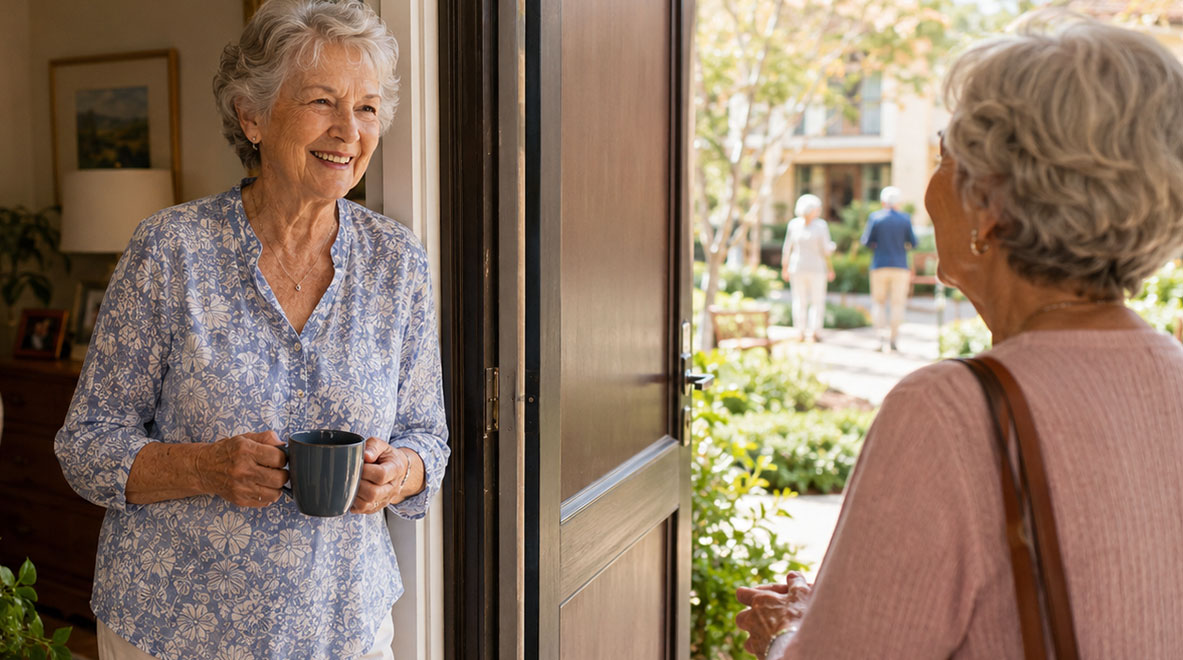
That distinction matters when someone is considering a move. Independent living is a lifestyle choice, not a form of medical care or personal assistance. It can offer fewer household responsibilities and more convenient opportunities to spend time with others, without taking away the freedom to decide when and how to participate.
Privacy Starts With a Place of Your Own
A private apartment gives each resident a home base. It is a place to wake up at a preferred time, enjoy a quiet morning, welcome visitors, work on a hobby, or simply close the door and rest. Personal belongings, familiar furniture, and favorite routines help the space feel like home rather than a temporary stop.
Choice remains central to the experience. Residents decide how to arrange their day and how much social time feels right. Some may enjoy a full calendar, while others prefer a slower pace with occasional gatherings. Neither approach is more correct. The goal is to make room for the life each person wants to lead.
Connection Stays Available Without Being Required
Living near other people can make connection easier, but it should never feel compulsory. Independent living communities may offer shared dining, activities, outdoor spaces, fitness opportunities, and informal places to visit. Residents can choose what interests them and skip what does not.
That choice can support connection in practical, low-pressure ways:
- A neighbor may be nearby for a spontaneous conversation.
- A shared meal can provide company without requiring a long outing.
- An activity can make it easier to meet people with similar interests.
- A common area can offer a change of scenery whenever it feels welcome.
These opportunities are close at hand, yet residents remain in control. Good independent living privacy includes the freedom to join in, step back, or change plans from one day to the next.
Convenience Can Protect Personal Time
Privacy is not only about being alone. It is also about having more say over how time and energy are used. When maintenance, landscaping, or other household demands become less consuming, residents may have more room for the parts of life they value.
One person may use that time to see family more often. Another may read, volunteer, travel, take a class, or enjoy an unhurried afternoon. Convenience supports independence when it removes obligations without replacing personal decisions.
Location and community services can also make plans easier. Transportation options, dining, events, and shared amenities may reduce the effort needed to stay engaged. Offerings vary by community, so older adults should look for the combination that fits their routines and priorities.
Privacy Does Not Have to Mean Isolation
Some people worry that valuing privacy means they are not social enough. Others worry that moving to a community will make every part of life public. Neither assumption captures the full picture.
A thoughtful independent living environment respects boundaries while making connection easier to reach. Staff and neighbors should recognize that residents are adults with their own preferences, relationships, and plans. Privacy is preserved through respectful communication, appropriate access to personal space, and the freedom to decide how each day unfolds.
At the same time, connection can remain close enough to feel natural. A familiar face in the hallway or an invitation to an event may help someone feel part of a community without changing who they are.
Finding the Right Balance
The right balance of privacy and connection is personal. During a visit, it can help to notice whether apartments feel comfortable, shared spaces feel welcoming, and the schedule offers genuine choice. Ask how residents hear about activities, whether guests are welcome, and how the community respects individual routines.
It is also worth paying attention to the overall atmosphere. Do residents seem free to come and go? Are there quiet places as well as social ones? Can someone participate without feeling pressured? These details often reveal more than a list of amenities.
A Final Thought
Home is personal. For someone considering independent living, the most important question may not be how many activities are offered, but whether the setting leaves room to keep living in a familiar, self-directed way. Privacy, choice, and connection should work together rather than compete for space.
For communities managed by Senior Housing Managers, being dedicated to “enhancing the lives of those we serve” means respecting a resident’s need for quiet as fully as the desire for companionship. It means creating opportunities without expectations and convenience without taking over.
As you compare communities, notice whether you can picture a life there that still feels distinctly your own. When the balance feels right, connection is close enough to enjoy and privacy remains yours to protect.
By Senior Housing Managers